


Last Updated: October 28, 2026
Quick Summary
Quality leather handbags for women start with full-grain leather, the strongest grade because it keeps the hide's natural grain intact. Press the leather to see if it springs back, check stitching for even spacing, and smell for an earthy rather than chemical scent. Ask the seller what grade the hide is before you buy.
- Genuine leather is a broad, lower-grade label, not a premium one.
- Vegetable-tanned leather is firm and develops a deep patina, suiting structured bags.
- Wipe bags daily with a dry, soft cloth and empty crumbs and receipts.
- Store bags stuffed with acid-free tissue in a breathable dust bag, never plastic.
- A cobbler can restitch a handle, replace a zipper pull, or reinforce corners.
Table of Contents
- How to Tell If a Leather Bag Is Good Quality
- Full-Grain Leather Handbags for Women: Why the Top Layer Matters
- Best Leather Handbags for Everyday Use: Fit, Structure, and Wear
- Leather Handbag Care Tips That Protect Your Investment
- Frequently Asked Questions
How to Tell If a Leather Bag Is Good Quality
Quality leather handbags for women reveal themselves in the details, not the label. At Urban Rustic Handmade, we suggest three checks: press the leather to see if it springs back, examine stitching for even spacing, and smell it, real leather smells earthy, not chemical.
Full-grain leather is the strongest grade because it keeps the hide's natural grain; genuine leather sits lower, often split and coated.
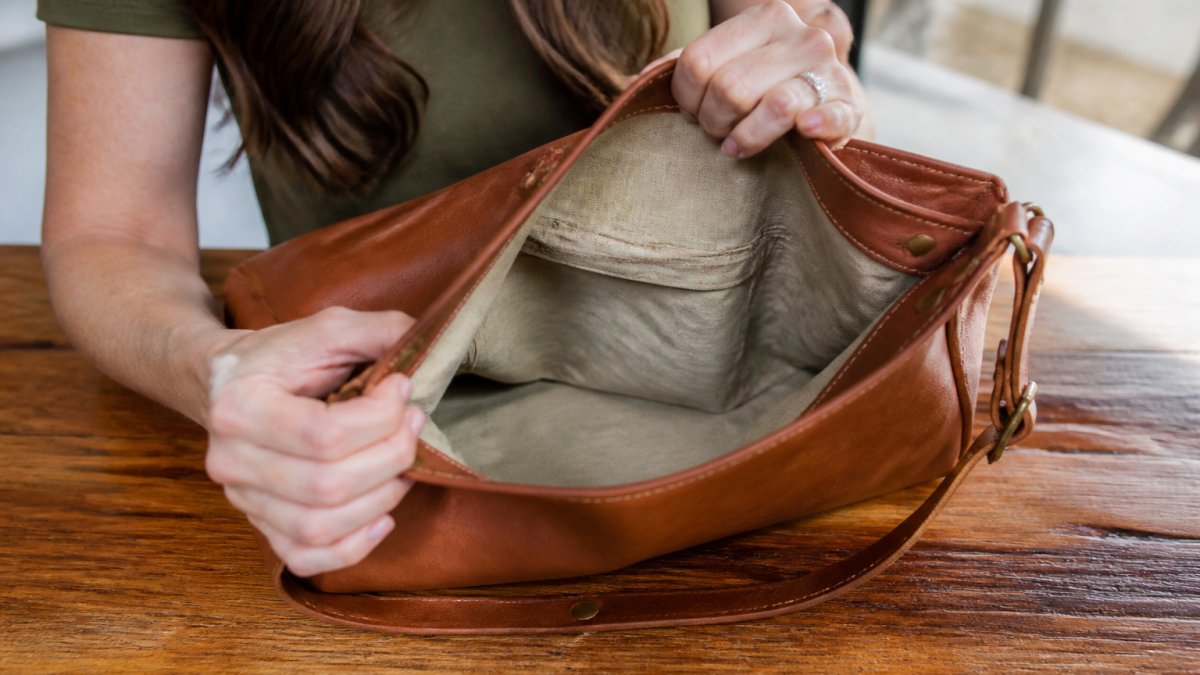
Bonded leather can look convincing in photos and peel within a season, so ask what grade the hide is before you buy.
Full-Grain Leather Handbags for Women: Why the Top Layer Matters
Full-grain leather handbags for women use the outermost layer of the hide, where fibers are tightest and natural grain is intact. That structure is why a well-tanned full-grain bag resists cracking, holds shape, and develops a patina rather than wearing through.
The leather grade scale, in plain terms
- Full-grain: Top layer, grain untouched. Strongest, most breathable, the only grade that patinas genuinely.
- Top-grain: Lightly sanded or buffed, often pigmented. More uniform and stain-resistant, less breathable, less likely to patina.
- Corrected-grain: Sanded, stamped with artificial grain, coated. Consistent look, but coatings can crack.
- Split leather: Lower layers, often embossed and coated. Weaker fibers, prone to peeling at flex points.
- Bonded leather: Scraps glued to a backing. The lowest tier; it can delaminate within a season.
What "genuine leather" actually means
"Genuine leather" is a broad, lower-grade label, not a premium one. It typically signals split or corrected-grain leather that has been finished and coated, real leather, but not the top of the hide, and it will not age like full-grain.
Tanning and finishing change the outcome
Two full-grain hides can behave very differently depending on tanning. Vegetable-tanned leather uses plant tannins, is firm, develops a deep patina, and suits structured bags; chrome-tanned leather is softer, more uniform, and dominates mass-market bags. Finishes matter too: aniline and semi-aniline let grain show through, while pigmented finishes add stain resistance at the cost of breathability.
A high price does not guarantee full-grain; it reflects brand, hardware, lining, and labor as much as the hide. Read the grade, not the label.
For care guidance, the Leather Care section of the American Leather Chemists Association offers useful reference points on conditioning and storage.
Best Leather Handbags for Everyday Use: Fit, Structure, and Wear
The best leather handbags for everyday use balance structure and weight. A structured tote holds its shape through commutes; a slouchy hobo softens with wear. Match the bag to your day.
- Tote bag: fits a laptop and files, best for office days
- Crossbody bag: hands-free, best for errands and travel
- Satchel: structured and polished, best for meetings
- Shoulder bag: easy access, best for daily carry
| Style | Best For | Structure |
|---|---|---|
| Tote | Work and commuting | Holds shape |
| Crossbody | Hands-free days | Compact |
| Satchel | Professional settings | Firm |
| Shoulder bag | Quick access | Soft to medium |
Leather Handbag Care Tips That Protect Your Investment
Leather handbag care tips come down to a routine, not a single product: keep the leather supple, keep moisture and heat away, and catch damage early. A bag cared for this way can last years longer.
A simple care routine
- Daily: Wipe with a dry, soft cloth and empty crumbs and receipts so the lining does not stain.
- Weekly: Check corners, handle attachments, and base for scuffs or loose stitching; fix small issues before they become repairs.
- Every few months: Clean with a leather-safe cleaner, then condition to match the finish, gentle for aniline and semi-aniline, standard for pigmented and corrected-grain.
- Seasonally: Rotate bags so leather can rest and recover its shape.
Storage that prevents damage
Stuff the bag with acid-free tissue or a clean pillowcase, then place it in a breathable dust bag. Avoid plastic, which traps moisture, and keep bags out of direct sunlight and away from radiators, vents, and car trunks; heat dries leather and accelerates cracking. Store straps inside the bag rather than hanging, which stretches the attachment points.
Material-specific notes
Suede needs a suede brush and eraser, not a cloth, plus a water-repellent spray before first use; nubuck behaves similarly. Patent leather should be wiped with a damp cloth and kept from materials that transfer color. Soft leathers benefit from a light conditioner and a bag shaper.
Repair before you replace
Many problems are fixable at modest cost: a cobbler can restitch a handle, replace a zipper pull, or reinforce corners, and hardware tarnish often cleans up with a jeweler's cloth. Before buying, ask whether the brand offers repairs or a warranty.
The Federal Trade Commission's guidance on leather labeling explains what terms like "genuine leather" legally mean, which helps you read tags with confidence. For broader material care standards, the conservation guidance from the National Park Service is a reliable reference.
Frequently Asked Questions
How can you tell if a leather handbag is good quality?
Check three things. First, the grain: full-grain leather shows natural markings and a soft, uneven texture rather than a uniform plastic sheen. Second, the stitching: even, tight stitches with no loose threads or skipped sections. Third, the edges: quality bags have burnished or painted edges, not raw, frayed ones. Smell also helps, since real leather has an earthy scent rather than a chemical one. Look inside too, because a sturdy lining and reinforced handles signal a bag built to last.
Is full-grain leather worth the price for a handbag?
Full-grain leather keeps the hide's strongest top layer, so it resists cracking and develops a patina over time instead of wearing out. Cheaper corrected-grain or bonded leather is sanded, coated, or glued together and tends to peel at stress points within a few years. If you plan to carry the bag daily, full-grain leather handbags for women usually cost more up front but last longer, which lowers the cost per wear. For occasional use, a mid-grade leather can be a reasonable compromise.
How do you care for a leather handbag so it lasts?
Store the bag stuffed with tissue in a dust bag away from direct sunlight and heat. Wipe spills with a dry cloth right away, and condition the leather two to four times a year with a product made for its finish. Keep it away from radiators and car trunks in summer. For scuffs, a soft cloth and a small amount of conditioner usually lifts them. A Lifetime Care Promise from the maker is worth asking about, since repairs handled by the original craftsperson preserve the bag far better than general repair shops.
Buying a leather bag should feel like an investment, not a gamble. Urban Rustic Handmade handcrafts each piece in Texas, backed by a Lifetime Care Promise and a Handbag Concierge to help you choose the right silhouette. Explore timeless, handcrafted pieces built to be cherished. Get started with Urban Rustic Handmade and shop the collection today.

